Week 1: Okay, We’re Actually Doing This
There’s a big difference between saying you’re going to get back in shape and actually putting on bike shorts at an unreasonable hour and doing something about it.
This week, we did something about it.
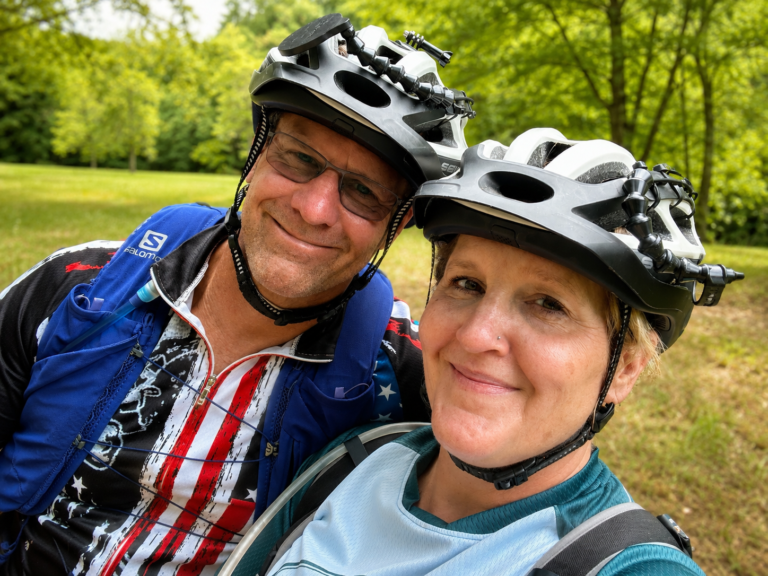
Week 1 of our 12-week cycling challenge is officially done, and I’m happy to report that our beginner cycling training went pretty well.
We completed all three rides: an easy ride, a moderate ride and our weekly long ride.
Nobody quit. Nobody threw a bicycle in a ditch. And so far, we’re still speaking to each other.
I’m calling that a successful first week.
Starting With the Easy Ride
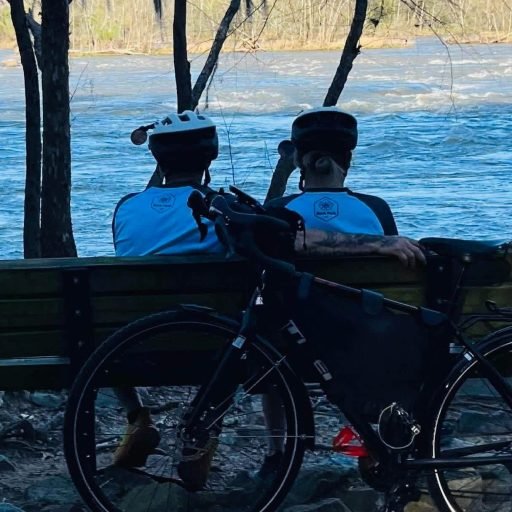
We did our easy ride on one of our favorite river trails.
We ride there a lot, and there’s a reason for that. It’s beautiful, we don’t have to deal with cars, and we can just get on the bikes and ride.
The hardest part for me about an easy ride is remembering that easy is actually the assignment.
It’s very tempting when you feel good to start pushing harder. But the whole point of this 12-week plan is to build our fitness gradually—not see how tired we can make ourselves every time we get on a bike.
So we rode.
We talked.
We enjoyed the trail.
And we resisted the urge to turn it into something it wasn’t supposed to be.
Then We Got Up at 4:30 A.M.
Our moderate ride was a little different.
We did that one in our neighborhood at 4:30 in the morning.
Yes. On purpose.
We live in South Carolina, we’re doing this challenge during the summer, and sometimes the choice is getting up before most reasonable people—or riding when it feels like the surface of the sun.
We chose darkness.
Our neighborhood also happens to have some pretty steep hills, which made it a great place for the moderate workout. We didn’t need a huge number of miles to get our heart rates up. The hills handled that for us.
It was also a good reminder that mileage doesn’t tell the whole story.
Ten flat miles on a trail and ten miles of climbing and descending through a hilly neighborhood are not the same ride.
Your terrain matters.
Back to the River for the Long Ride
For our first long ride, we headed back to the river trail.
This ride wasn’t about going fast. It was about spending more time in the saddle and beginning the gradual process of building endurance.
That’s really what we’re trying to accomplish with this entire challenge.
We want to be able to ride farther and take on bigger adventures without every big ride becoming a monumental physical event.
We aren’t training to race.
We’re training so that when somebody says, Hey, want to ride that? our first thought can be yes instead of Dear God, how many miles is it?
Week 1 was just the beginning, but it felt good.
So…What Kind of Bike Do You Actually Need?
Since we’re talking about starting—or getting back into—cycling, this seems like a good time to talk about bikes.
Because cycling has a way of getting complicated very quickly.
You start with:
I want to ride a bike.
And approximately eleven minutes later you’re reading about frame geometry, tire clearance, gear ratios and whether your life would somehow be better with carbon fiber.
It doesn’t have to be that complicated.
If you’re starting a fitness plan like ours, you probably don’t need to run out and buy a new bike.
The bike you already have may be perfectly fine.
The important questions are: Is it comfortable? Does it fit you reasonably well? Is it mechanically sound? And does it work for the kind of riding you want to do?
Road Bikes
Road bikes are designed primarily for pavement. They’re generally lighter and more efficient, which makes them great for covering longer distances.
The more forward riding position and drop handlebars can take some getting used to, though, especially if you haven’t ridden in a while.
Gravel Bikes
Gravel bikes look a lot like road bikes but are generally designed to handle a wider variety of surfaces.
With wider tires and a little more versatility, they can be a great option if your adventures might include both pavement and unpaved roads or trails.
Hybrid and Fitness Bikes
These can be excellent bikes for someone getting into—or back into—cycling.
They generally give you a more upright riding position and work well for recreational riding, paved trails and fitness rides.
You don’t have to be folded over a set of drop bars to get a good workout on a bicycle.
Mountain Bikes
If you plan to ride actual trails, rocks, roots and rough terrain, that’s where a mountain bike shines.
You can certainly ride one on pavement too. The bigger tires and heavier setup just mean you’re probably going to work a little harder to cover the same distance.
Which isn’t necessarily a bad thing when you’re trying to get fit.
And Yes, E-Bikes Count
Pedal-assist e-bikes can be a great option for a lot of people.
They can help with hills, make longer distances more manageable and allow people with different fitness levels to ride together.
The point isn’t proving how miserable you can make yourself.
The point is riding.
The Most Important Part
Don’t let the bike you don’t own keep you from riding the bike you do own.
Ride for a while.
Figure out what you enjoy.
As you get more experience, you’ll have a much better idea of what you actually want in your next bike—if you even need another one.
A Few Little Things That Make Riding Better
You don’t need a garage full of cycling gear to get started either.
But there are a few relatively inexpensive things we’ve found useful—especially as our rides start getting longer.
Chamois cream: This falls firmly into the category of things that don’t seem terribly important until they suddenly become extremely important. If you’re spending more time in the saddle, a little extra protection against friction can make a big difference in comfort.
Hydration/electrolyte mix: We’re training through summer, so hydration is something we’re taking seriously. For longer or hotter rides, we use hydration mixes to help replace electrolytes along with fluids.
Easy-to-carry fuel: As the rides get longer, we’re also practicing fueling on the bike. Gels are one convenient option because they’re small and easy to carry, although they’re certainly not the only way to fuel a ride.
Chamois cream we use: Chamois Butt’r
Hydration mix we use: Tailwind Endurance Fuel
Gels we use: GU Energy Gel
What We Learned in Week 1
Honestly, Week 1 wasn’t particularly dramatic.
And that’s probably a good thing.
We learned that easy rides need to stay easy. We learned that hills can make a relatively short ride plenty challenging. We confirmed that our favorite trail is going to be a great place for some of our longer training rides.
And apparently we learned that we’re willing to ride bicycles at 4:30 in the morning to avoid South Carolina heat.
Mostly, though, we showed up and did the work.
All three rides.
Week 1 done.
Eleven to go.
Adventure is worth training for.
Follow Along With Us
We’re documenting the entire 12-week challenge—the good rides, the hard ones and whatever ridiculous things happen along the way.
[Watch our Week 1 video on YouTube]https://youtu.be/tvRT5J_YiNc?is=8wHzxMChZ2gmiHXZ.